

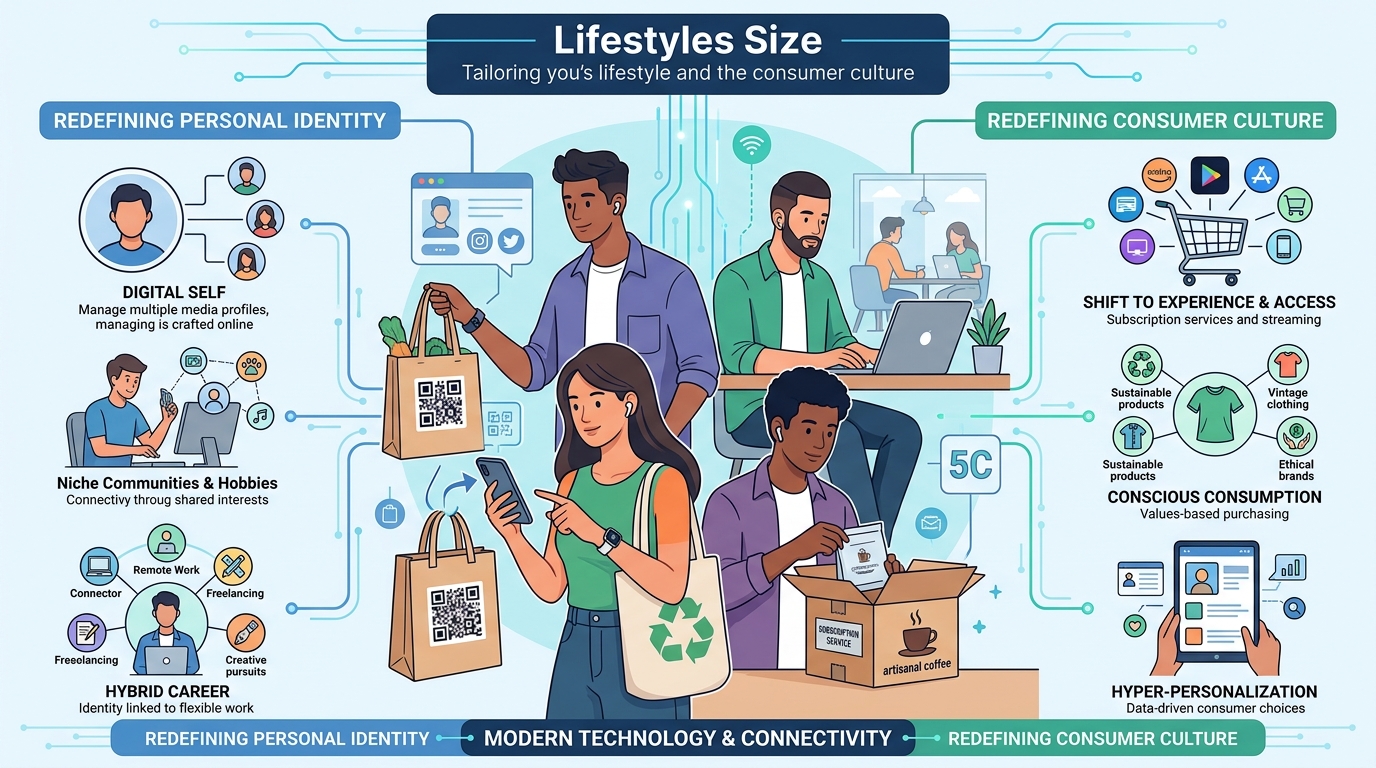
On a crowded subway in New York, a young entrepreneur scrolls through fitness apps while sipping an oat milk latte. Across from him, a remote designer finalizes a work presentation from her tablet, dressed in athletic wear that doubles as office attire. A few seats away, a college student watches videos about minimalist living while browsing luxury sneakers online. None of these people know each other, yet they are all connected by a quiet but powerful concept shaping modern society: lifestyles size.
The phrase may sound unusual at first, but lifestyles size reflects something deeply familiar in today’s world. It represents the expanding scale of personal identity, consumption habits, wellness priorities, digital influence, and social expectations that define how people choose to live. In an era where lifestyle is no longer a private matter but a public expression, the “size” of one’s lifestyle increasingly affects purchasing decisions, career paths, mental health, and even relationships.
As global culture becomes more interconnected, lifestyles are no longer confined to geography or tradition. A teenager in Pakistan may follow Scandinavian interior design trends, while a founder in Silicon Valley embraces Japanese minimalism. The boundaries between aspiration, identity, and consumer behavior have blurred. Understanding lifestyles size is therefore not just about trends; it is about understanding how people define success and belonging in the modern age.
The Evolution of Lifestyle in the Digital Era
For most of history, lifestyle was largely shaped by necessity. People lived according to local customs, economic conditions, and family expectations. Choices were limited, and identity was often inherited rather than curated.
The internet changed everything.
Today, social media platforms, digital marketplaces, and streaming culture expose individuals to thousands of lifestyles daily. People are no longer comparing themselves only to neighbors or coworkers. They are comparing themselves to influencers, entrepreneurs, athletes, travelers, and creators from across the globe.
This constant exposure has expanded lifestyles size beyond physical possessions Modern lifestyles now include digital identities, wellness habits, productivity systems, travel experiences, fashion aesthetics, and personal branding. Consumers are not simply buying products anymore; they are buying narratives about who they want to become.
The rise of remote work accelerated this transformation further. Homes became offices, gyms became living rooms, and online communities replaced traditional social circles. As a result, individuals began investing more intentionally in environments and routines that reflected their desired identity.
Why Lifestyles Size Matters in Consumer Behavior
Businesses have realized that modern consumers rarely make decisions based on function alone. Emotional alignment plays a significant role. A person purchasing a smartwatch may not only want health tracking features; they may also want to feel disciplined, ambitious, and future-focused.
This is where lifestyles size becomes commercially significant.
Brands increasingly market experiences instead of products. Fitness companies sell empowerment.Technology firms promote efficiency and innovation. Fashion labels advertise confidence and exclusivity. Even food brands position themselves around wellness, sustainability, or social values.
The table below highlights how lifestyle-driven purchasing has evolved across industries.
| Industry | Traditional Buying Motivation | Modern Lifestyle-Driven Motivation |
|---|---|---|
| Fashion | Clothing necessity | Personal identity and social image |
| Technology | Functional utility | Productivity and status |
| Fitness | Physical health | Self-improvement and discipline |
| Food & Beverage | Hunger and convenience | Wellness and ethical living |
| Travel | Vacation and leisure | Experience and self-discovery |
This shift explains why lifestyle-focused branding often outperforms purely product-focused advertising. Consumers want products that fit into the story they tell about themselves.
The Psychological Impact of Expanding Lifestyles Size
While the growth of lifestyle culture has created opportunities for creativity and self-expression, it has also introduced new psychological pressures.
Modern individuals often feel compelled to optimize every area of life simultaneously. Career success, physical fitness, financial independence, mental wellness, social influence, and aesthetic living spaces are now presented as achievable standards rather than exceptional accomplishments.
This creates a phenomenon psychologists frequently describe as “performative living.” People may begin making choices based less on personal fulfillment and more on external validation.
For example, someone may travel not primarily for enjoyment but for social media content. Another person may pursue luxury products less for quality and more for perceived status. Over time, the pressure to maintain a certain lifestyle image can become emotionally exhausting.
The growing size of modern lifestyles has therefore created a paradox. People have more freedom than ever before, yet they often experience greater anxiety about whether they are living correctly.
Experts in behavioral psychology note that constant comparison can reduce satisfaction, even among successful individuals. When exposure to aspirational lifestyles becomes endless, contentment becomes difficult to maintain.
Minimalism and the Pushback Against Excess
Interestingly, one of the strongest reactions to expanding lifestyles size has been the rise of minimalism.
Minimalism is not simply about owning fewer possessions. It reflects a broader rejection of excessive consumption and constant comparison. Many people now prioritize intentional living over visible luxury.
This movement gained momentum because individuals began recognizing the emotional and financial costs of maintaining highly curated lifestyles. Minimalist thinkers argue that freedom often comes from reducing unnecessary complexity rather than expanding it.
The popularity of decluttering methods, capsule wardrobes, digital detoxes, and slow living trends reveals a growing desire for balance. Consumers are becoming more aware that bigger lifestyles do not automatically create happier lives.
However, even minimalism has become part of lifestyle branding in some ways. Carefully designed minimalist homes, neutral fashion aesthetics, and productivity-focused routines are now widely commercialized online. This demonstrates how adaptable lifestyles size has become in modern culture. Even simplicity can evolve into a marketable identity.
Social Media and the Performance Economy
No discussion about lifestyles size is complete without addressing social media.
Platforms like Instagram, TikTok, and YouTube transformed ordinary daily life into consumable content. Meals, workouts, vacations, morning routines, and home interiors are now publicly shared and evaluated.
This has created what many analysts call the “performance economy,” where visibility itself holds value. People increasingly shape experiences around how they will appear online.
Influencers play a major role in this ecosystem because they present lifestyles as both inspirational and attainable. Their content blurs the line between authenticity and marketing. A casual coffee photo may actually be part of a brand partnership. A productivity video may simultaneously function as entertainment and advertising.
For younger generations especially, lifestyles size is often tied to digital presence. Online identity can influence career opportunities, friendships, and purchasing behavior.
At the same time, audiences are becoming more skeptical. Consumers increasingly value transparency and authenticity over exaggerated luxury. This shift explains the growing popularity of creators who share realistic routines, financial struggles, and imperfect experiences.
The Economic Side of Lifestyle Expansion
The economic implications of lifestyles size are substantial.
Entire industries now depend on aspiration-driven spending. Wellness technology, luxury travel, home design, self-improvement courses, creator tools, and personal development platforms have all experienced rapid growth because people are investing heavily in lifestyle enhancement.
Subscription culture also reflects this trend. Consumers pay monthly fees for streaming services, meditation apps, fitness programs, meal plans, and productivity tools designed to improve daily living.
Yet this expansion carries financial risks.
Many individuals feel pressure to spend beyond their means to maintain certain lifestyle expectations. Credit-driven consumption has become common in societies where visible success is socially rewarded.
Financial experts increasingly encourage “lifestyle alignment” rather than “lifestyle inflation.” The distinction matters. Lifestyle alignment means spending according to personal values and long-term goals, while lifestyle inflation involves constantly increasing expenses to match social expectations.
The difference often determines whether modern lifestyle culture becomes empowering or financially destructive.
Redefining Success in the Modern World
Perhaps the most important conversation surrounding lifestyles size involves the definition of success itself.
For decades, success was commonly measured through income, possessions, and professional status. Today, many people prioritize flexibility, purpose, wellness, and meaningful experiences instead.
A high-paying corporate job may no longer appeal to someone who values remote freedom and creative independence. Similarly, a smaller home near nature may feel more successful to one person than a luxury apartment in a crowded city.
This cultural transition reflects a deeper shift in values. People increasingly want lifestyles that support mental health, relationships, and personal fulfillment rather than simply public recognition.
Organizations are responding as well. Companies now compete not only through salaries but also through workplace culture, flexibility, wellness benefits, and purpose-driven missions.
In many ways, lifestyles size is becoming less about visible scale and more about intentional design.
The Future of Lifestyles Size
Looking ahead, lifestyles size will likely continue evolving alongside technology and social values.
Artificial intelligence, virtual reality, and personalized digital ecosystems may create even more customized lifestyles. Individuals will have greater control over work environments, entertainment, learning, and social interaction than any previous generation.
At the same time, society may continue pushing back against overstimulation and excessive consumption. Sustainability concerns, mental health awareness, and economic uncertainty are already encouraging many people to rethink what truly matters.
The future may therefore belong to balanced lifestyles rather than endlessly expanding ones.
People are beginning to recognize that the quality of life cannot always be measured through visibility, possessions, or productivity metrics. Fulfillment often comes from clarity, relationships, health, and purpose elements that cannot always be displayed online.
In the end, lifestyles size is not merely about how people live. It is about how modern culture shapes identity, ambition, and meaning itself. The choices individuals make today what they buy, share, prioritize, and pursue reflect broader cultural transformations happening across the world.
And perhaps the most important realization is this: a meaningful lifestyle is not necessarily the largest one. It is the one that genuinely aligns with who a person wants to become.